New London Architecture
Five minutes with... Cathy Russell
Tuesday 29 July 2025
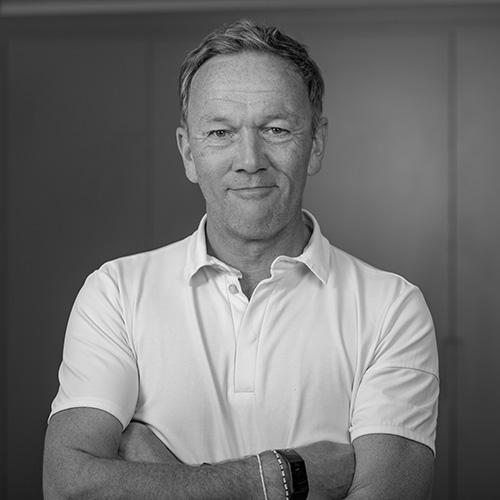


David Taylor meets Ryder’s urban design director Cathy Russell to talk about how hitting the UK’s 1.5 million homes targets should be much more than numbers alone.
David Taylor
David Taylor
Hi Cathy, how are you?
Cathy Russell
Hi, I'm good, thanks. How are you?
David Taylor
I'm very good, thank you. I wanted to ask you about ‘Beyond numbers, a diverse approach to the UK housing challenge’, which is a report that you've just produced with a number of other parties. What would you say is its main message? Is it broadly that in the quest for numbers, and we're talking 1.5 million homes, of course, over the next parliament, that we should pay a bit more attention to quality design as it relates to health and other factors, is that the main message?
Cathy Russell
Yes, it is. It's exactly that. So yes, this was a piece that we collaborated on with Okana and Ryder, along with UrbanPlaceNetwork Urban Col.labs and i2C. It was really around that recognition that there does need to be a shift in the way that housing is delivered from the last 50 years or so, in terms of perhaps relying too much on the private sector, particularly to meet affordable need, and that drop off in social housing. So, it's about how we can encourage different ways to meet the housing crisis and address that challenge. We welcome the fact that there is a policy drive to do that now. But I think it's not just enough to talk about numbers, and we also see this as a huge opportunity to tackle some of the other major issues. So, the climate crisis, public health, social care, community, and I think it comes back to neighbourhoods which meet people's needs, a real foundation for health, whether that's physical and mental health and life opportunities as well.
I think some of the work that's been done recently by the TCPA on their campaign for healthy homes around meeting residents' basic human needs, but also around our access to green space and local services, clean air, really housing as a human right, rather than a commodity, is really important to recognise. And I suppose it's seeing this need to address the housing crisis as an opportunity to also take on these other challenges and issues as well.
I wanted to reference another book that we have found really inspiring, called Housing for hope and wellbeing by Flora Samuel, and that's really looking at how housing and neighbourhoods have an important contribution to make to our wellbeing, self-development and social value. I think there's maybe a bit of a risk when you're talking about just the number of homes to be built. It's forgetting that they are actually places, and they should be places with other reasons to go there as well. So: getting away from that sense of mono-cultural development, which basically means more car travel, less social interaction. And then I think there are probably some additional steps which shouldn't be avoided for the sake of generating numbers quickly. Things like community and resident engagement and database site selection, which we do talk about, or we will talk about a little bit more in the next papers that we're planning to publish. I think essentially, what we've seen in this paper is that there's a huge opportunity to get this right by taking a holistic approach, acting on all the evidence and best practice that there is out there, rather than just business as usual. And really ensuring that, in the rush, we're not closing doors to a mix of different solutions to meet different needs.
David Taylor
You mentioned place, and one of the places in the document that I've just flicked through is Stockton Town Centre, which is presumably one of your projects. How does that – or any of the other projects that you illustrate in the document – encapsulate some of this thinking.
Cathy Russell
I think it always goes back to what is special, what is unique about the place, and taking that, and its wider context, as the starting point. So really understanding place, understanding people within that place as well. And I think on the Stockton example you mentioned, that was a concept design testing option to reuse a brownfield site in the town centre for new homes. So, we'll be looking at opening up views and access to the waterfront. The river being the setting, and being a really key part of that place, and providing an environment within the streets which really puts people first. Also looking at how it connects into existing walking and cycling routes, and then onto the high street. Part of our masterplan to transform Stockton Town Centre is based on the high street and waterfront, working with a council who had taken the decision to try to tackle some of the high retail vacancy rates within the town centre made the decision to consolidate some of that retail offer and actually create a new park and waterfront in the town centre, connecting the river back to the high street. I think it's looking at how you connect the new homes within that location into this new destination and park and green space, so that everybody can benefit from that as well. We've also done a little bit of wider work with the council using the Healthy Streets framework, which was developed by Lucy Saunders, previously of Transport for London, which is around 10 indicators. It's evidence-based; it's been really interesting working on that pilot project, and that's hopefully something that we can apply to other places as well
David Taylor
Is it that, in general, healthier streets are less car-dominated? I noticed this is pretty traffic-calmed, this particular project, and presumably the one you produced at Liverpool Green Lanes, which you won a prize for at the Healthy City Design International Congress, was similarly car-free, or at least calmed. Is that a consistent point in your theories here?
Cathy Russell
Yes, I think so. Recently, at the Festival of Place, there was a really great talk by Dinah Bornat on her work around places for play and creating neighbourhoods and streets which encourage more kids to play out. And I think there's some key principles there, around sight lines, around direct access from homes, in terms of the spaces that we're creating. But I think probably most importantly, no, or few, cars. So, yes, I think that is something that we try to implement as much as possible. In terms of the Green Lanes project, it's a slightly different context. It's city centre. It is urban, but it was looking at if there is already a large-scale regeneration project, in that case, the knowledge quarter in Liverpool, how can we better connect that to other places like the waterfront, where there is a lot of investment, and also the surrounding communities being really important in terms of how people move around the city, and can get access to services and amenities and the destinations that they need to in a way that's safe and attractive and encourages walking, cycling and wheeling. Yes, reducing, minimising traffic and the space given to vehicles is really important as part of that. That was very much about green infrastructure, hence the title, but it was also about repurposing buildings, making the most of assets along that route, about sites along there which could potentially host new uses. It was about involving the community and activating those spaces. And I think in terms of the link back to the article I suppose it was much about the process, in that it brought lots of different stakeholders together, so public, private, third sector, around, a vision, really. And I think that's really important if we're thinking about planning large scale new settlements.
David Taylor
Speaking of which: New Towns. Obviously, it's in the frame over the over the coming weeks and months, I think, with the Task Force reporting imminently. What is your view about the government's thrust towards New Towns? Is there a concern? I noted in the report that there seemed to be a concern from you that existing places may get left behind in this thrust.
Cathy Russell
Yes, I think New Towns are a very valid solution to hitting the target for much-needed housing but really that we need to test the siting of them, and the design really robustly, to really understand whether it is the right solution, on a case-by-case basis, I suppose, acknowledging that there are multiple ways to deliver housing and that a mixed palette of typologies is positive and will contribute to a more balanced solution overall. That's not to say that they shouldn't happen at all. I think just acknowledging that, whilst doing that, we can't ignore of all of the existing places that, as you say, could potentially get left behind: existing centres which already have that physical and social infrastructure, but there might be challenges around developing brownfield land or remediating land that are felt to be too great, despite the fact that they are already in really sustainable locations. So, I think it's just getting the balance right. We should be looking at retrofitting existing homes, bringing empty homes back into use, repurposing existing buildings, and developing sites within existing urban centres, making sure that we're focusing development wherever possible, around sustainable transport. But I think New Towns are a really valid part of that mix as well. There are maybe other risks as well around those large-scale settlements being isolated from other places. And I think if you go back and look at the Garden Cities model it was never supposed to just be in isolation. You've got these other kinds of nodes in it, I guess as well, thinking about the 15-minute city model as well. I guess it's thinking of not just one in isolation. It's about that network of lots of centres, which all link up through sustainable methods. I think that's where we need to be heading. In our article, it talks about the New Economics Foundation report that showed that, increasingly, homes are being built over the last 15 years in places where people are reliant on cars for transport, so that's all regions outside of London, essentially, and that the public transport travel times between home to jobs and other services have risen as well over the same period. So, it's making it harder for people to travel sustainably. I think that really needs to form the basis of the investment in infrastructure and the location, the siting of these new places for people to live. So, it's about layering and mapping those and making sure that we are aligning those transport and home strategies.
David Taylor
Last question. How optimistic are you about the UK's ability to respond well to the housing crisis? Are we going to be in this same conversation in five, 10 years’ time? Or are you more optimistic that, actually, real progress will be made?
Cathy Russell
In terms of the principles, I think things like the New Towns Task Force – their interim report published in February was encouraging, in terms of the lessons learned from previous New Towns, around engagement, stewardship, balanced communities. So, it's saying all the right things about higher densities, being well-connected. But how this will actually be translated into development, I think, is the big question. I think it is a similar case with the Design Council’s work on New Towns around ensuring that we address the housing crisis, but within the UK's legally binding Climate Commitment; increasing climate resilience, promoting nature recovery, ensuring the low carbon construction of new homes and maximising the upgrading of existing buildings: really, really vital stuff. But again, how is that going to be translated into the reality of a shortage of skills, of capacity, both in construction and planning? I think it's going to be really, really difficult and challenging, but I think we need to do it in order to take the opportunity that I mentioned earlier, around helping to address some of those other issues as well, around health and climate and communities.
David Taylor
Well, here's hoping that we do make some progress, aided by a series of reports from you – since this is I believe the first in a series. What's next in the series, and what do you hope the outcome will be?
Cathy Russell
We've got a few more articles planned. The next one is going to be from talk to town, co-creating the future of New Towns, which is all about learning lessons from the post-war New Towns, and looking at how we can better involve communities in the planning and design and long-term stewardship of the places where people live. And then we're going to look at data mapping and site selection, which will be led by Urban Col.labs. We're going to look at sustainability and landscape-led place making. We're going to look at future places, so really thinking more, even longer term. So: what a place is going to need to be providing in 50, 70 years. And then design for everyone, making sure that inclusive design is at the heart of the new places that we're providing. And we've also got an urbanOvation webinar event, which will be scheduled in September, and there'll be more details on that to follow.
So, I think we're hoping really just to continue that broader discussion about high-quality healthy living being just as critical to hitting those numerical targets and really looking for further engagement with local authorities, government and developers about how we can achieve those outcomes.
David Taylor
Yes, beyond numbers! Brilliant. Thanks very much for talking us through this, Cathy, and good luck with it all!
Cathy Russell
No problem. Thanks very much!
Share this news


Recent

News
Illustrating Richmond’s High Street
Be Richmond’s Anna Bromley explores the newest addition to Richmond’s Public Art Programme, bringing the borough’s uniqu...

News
The infrastructure decisions developers should be making before they buy land
Abdul Ismail of new NLA member Sterling Energy Group explores how early utility planning can help developers manage cost...

News
Celebrating the NLA Awards 2026 Mayor’s Prize shortlist
Meet the five projects shortlisted for the NLA Awards 2026 Mayor’s Prize. Join London’s built environment at Guildhall o...
Stay in touch
Upgrade your plan
Choose the right membership for your business
Billing type:
Small Business Membership
£90.00
/month
£995.00
/year

For businesses with 1-20 employees.
Medium Business Membership
£330.00
/month
£3,850.00
/year

For businesses with 21-100 employees.

View options for
Personal membership